All states have queer people, but not all states have a statewide news outlet dedicated to telling their stories. That makes QueerKentucky stand out. The nonprofit LGBTQ newsroom covers state politics and issues, as well as culture and health. This week’s conversation is with Executive Director Missy Spears, who talks about trying to reach and reflect queer communities from Louisville to Paducah.
Also: Auburn ditches its faculty senate, Georgia tries to turn Democrats “nonpartisan,” and North Carolina sees a big health insurance decline. Plus, it’s FestivalSouth time in Hattiesburg.
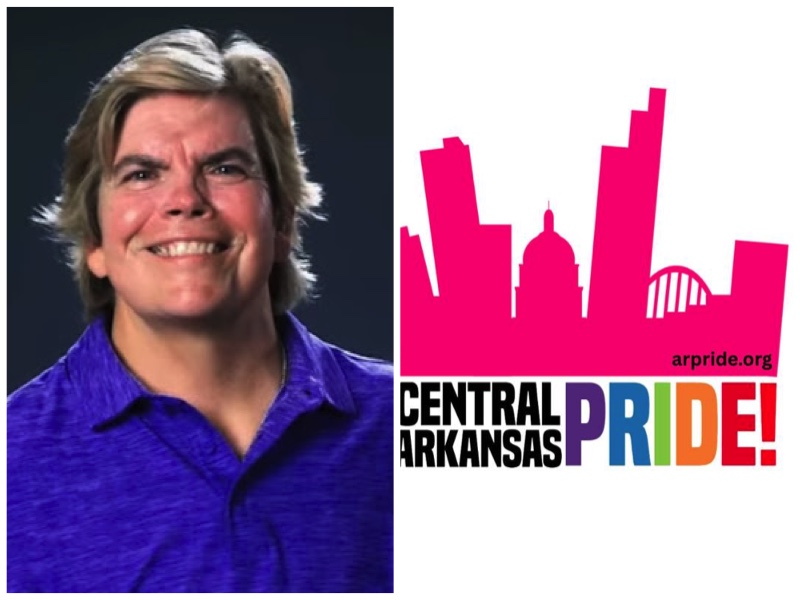
It’s another fraught Pride Month in the South, where LGBTQ rights remain under attack from conservative lawmakers. This week we talk to Dolores Wilk of Central Arkansas Pride about their advocacy for the state’s queer population, and the importance of visibility — including a Pride celebration right in front of the state Capitol Building.
Also: The Supreme Court lets Alabama go back to marginalizing Black voters; the troubled history of a for-profit immigrant detention center in Louisiana; and Virginia Gov. Abigail Spanberger disappoints the state’s cannabis industry. Plus, a look at gay Florida playwright Matthew Lopez, and a current production of his work in Jacksonville.
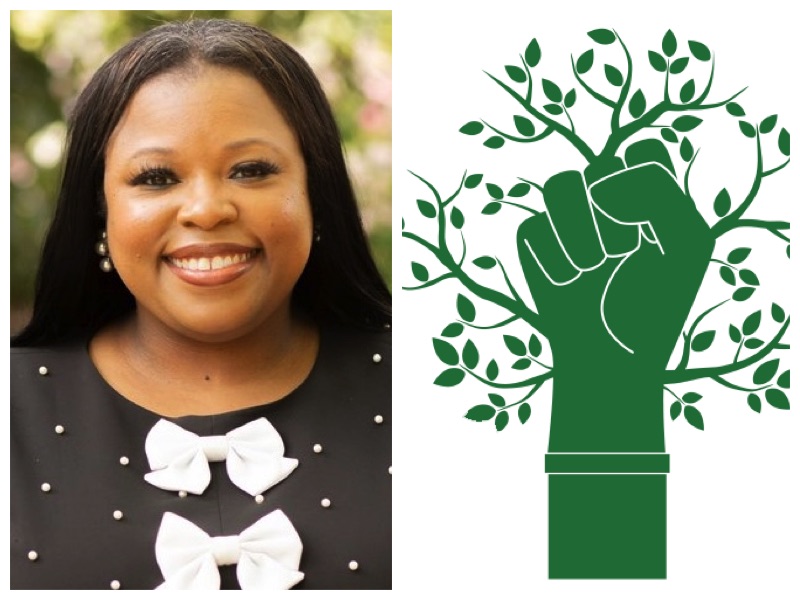
LaTricea Adams learned about environmental racism first-hand, growing up in Memphis and seeing the differences between Black and white neighborhoods. She now leads Young, Gifted and Green, a nonprofit that trains young people in organizing and environmental justice. In this week’s interview, she talks about how the water crisis in Flint, Mich., turned her into an activist — and how resistance to data centers across the country is creating new alliances across regions and races.
Also: Right-wing redistricting momentum sputters in South Carolina and Alabama; what Ken Paxton’s primary win means in Texas; and why New Orleans is tired of hearing about its impending doom.
And in our arts and culture segment, we pay tribute to the great transgender fantasy artist and Atlanta native Jeffrey Catherine Jones.
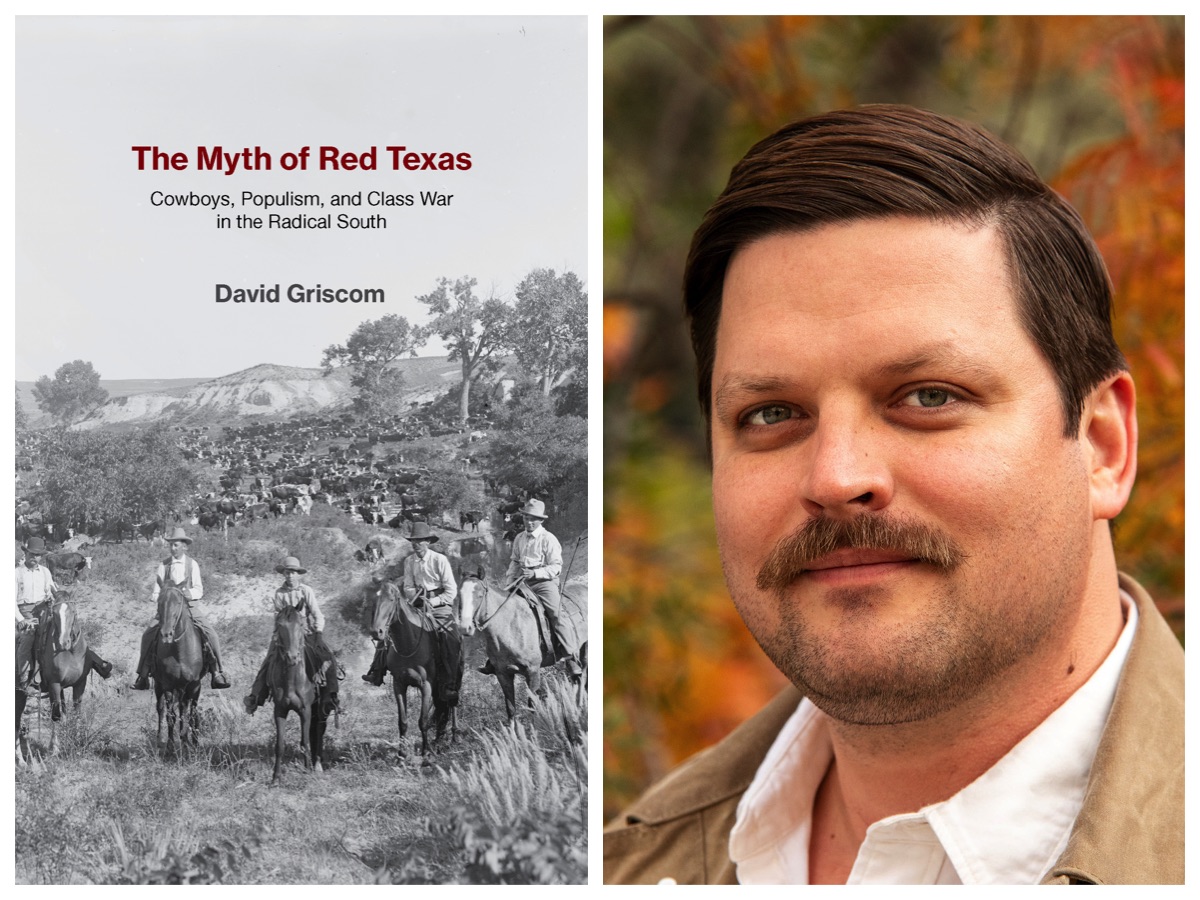
Texas conservatives like to cultivate an image of the state as a frontier of rugged individualism and unbridled capitalism. But it is also the land of the Cowboy Strike and the Texas People’s Party, a contested terrain with an often overlooked history of radical politics. That’s what writer and Austin native David Griscom brings to light in his new book, The Myth of Red Texas. This week, we talk to him about some of the stories he uncovered — and the lessons they provide for the state’s present and future.
Also: the latest on the post-Callais redistricting frenzy across the South; the federal prosecution of the Southern Poverty Law Center; and a Tennessee school system bans Alex Haley’s Roots.
Plus: Georgia artist Amy Sherald brings her exhibition American Sublime to Atlanta, after withdrawing it fro the politicized National Portrait Gallery.
Carving up its congressional district is just Tennessee’s latest assault on its largest Black-majority city.
By Jesse Fox Mayshark May 19, 2026
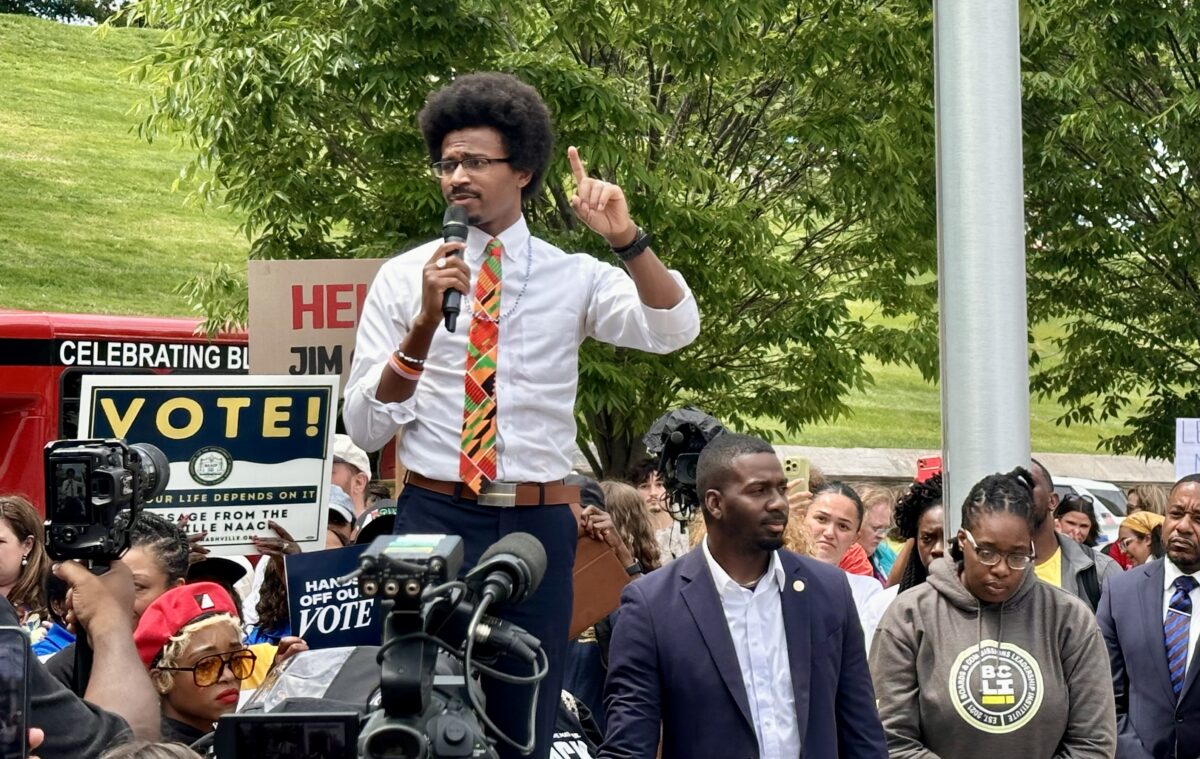
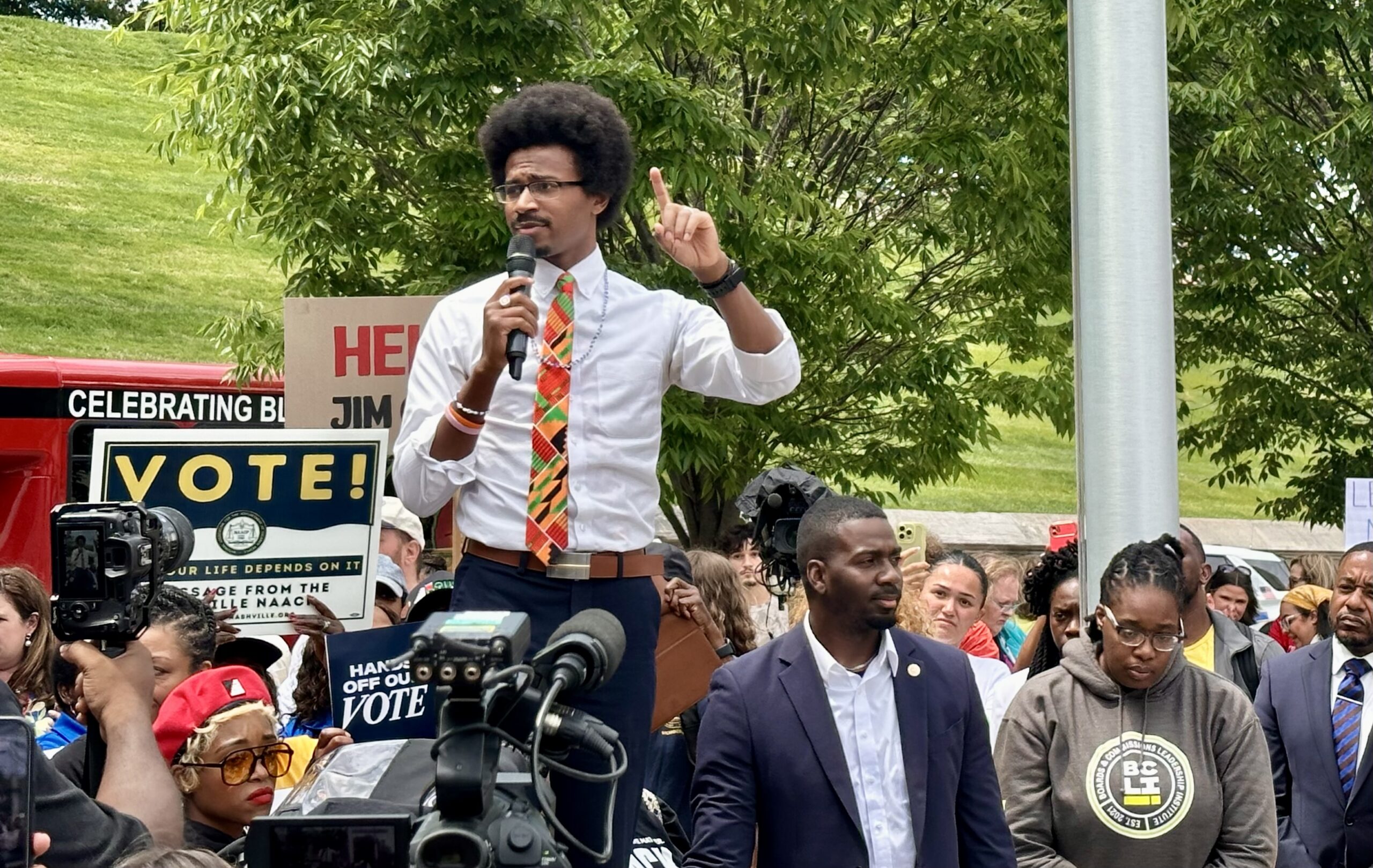
Memphis state Rep. Justin J. Pearson speaks at a rally outside the Tennessee State Capitol on May 5, 2026
I was in Memphis a few weeks ago. One day, I happened to park my car in a free curbside spot along G.E. Patterson Avenue.
I was headed to the National Civil Rights Museum at the site of the Lorraine Motel. I had been there before, but not in some time, and I wanted to refresh my acquaintance.
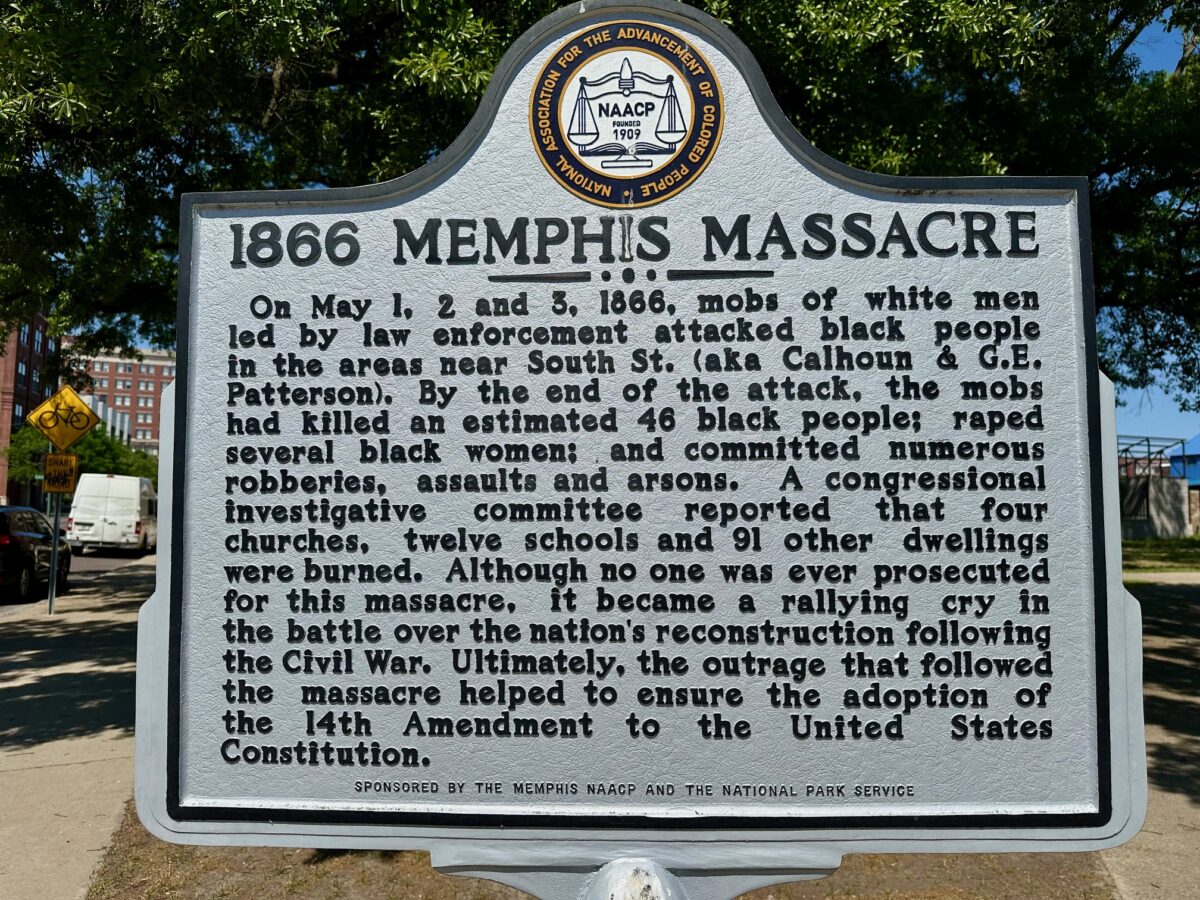
But I was stopped there on the sidewalk, just a few dozen feet from my car, by a historical marker in a small pocket park on the corner of South 2nd Street.
It was one of those painted metal signs, with raised black letters on a white background. This one said it was installed by the Memphis NAACP and the National Park Service.
In large print at the top, it said, “1866 Memphis Massacre.”
Here’s the text beneath:
“On May 1, 2 and 3, 1866, mobs of white men led by law enforcement attacked Black people in the areas near South St. (aka Calhoun & GE Patterson). By the end of the attack, the mobs had killed an estimated 46 Black people; raped several Black women; and committed numerous robberies, assaults and arsons.
A congressional investigative committee reported that four churches, twelve schools and 91 other dwellings were burned. Although no one was ever prosecuted for this massacre, it became a rallying cry in the battle over the nation’s reconstruction after the Civil War. Ultimately, the outrage that followed the massacre helped to ensure the adoption of the 14th amendment to the United States Constitution.”
This is just a few blocks from the Lorraine, where Martin Luther King Jr. was murdered by a white supremacist in 1968, more than a century later.
Memphis is known for many things. It was home to the Black composer and bandleader W.C. Handy, an Alabama native who settled in the city in 1909 and had the first big hits with songs derived from the blues, including his classics “Memphis Blues” and “Beale Street Blues.”
It was home in the 1950s to Sun Records and Elvis Presley, who became a global superstar by mixing Black and white music, blues and R&B and country, into what was known as rock ‘n’ roll.
And the next decade, to Stax Records, the epicenter of Southern soul music — and the source of one of the city’s nicknames, Soulsville USA.
Of course, you can’t talk about Memphis without talking about its barbecue, which is central to its enthusiastic food culture.
Throw in the ducks at the Peabody Hotel, and maybe the Bass Pro Shop in the glass pyramid by the Mississippi River, and that’s essentially the tourist brochure of the city — all noteworthy, but insufficient to understanding its place and significance.
Memphis has had one of the South’s largest concentrated African-American populations since the years after the Civil War, when many formerly enslaved people moved to cities in search of opportunities and some degree of racial solidarity.
It used to be the largest city in Tennessee, but it has been losing population in recent decades while Nashville has boomed. As of 2024 Census estimates, there were about 610,000 people living in city-limits Memphis, compared to 705,000 in Nashville.
About 68 percent of Memphis residents are Black or multi-racial, and less than a quarter are white. This has also shifted over the years. Memphis didn’t actually become a majority-Black city until the 1980s, as white flight to its suburbs after integration changed its racial balance.
It elected its first Black congressman, Harold Ford Sr., in 1974 — just nine years after the passage of the Voting Rights Act. He held the seat until 1997, when he was succeeded by his son, Harold Ford Jr., who occupied it for another decade.
Since then — but not for much longer — Memphis has been represented in Congress by Steve Cohen, Tennessee’s first Jewish congressman and one of the few white representatives from a majority-Black district.
That district is no more. On May 7, the Republican-dominated Legislature approved a new map in which the former 9th Congressional District is split among three elongated districts with white majorities.
Some conservatives trying to justify the dismemberment of the district have pointed to Cohen’s long tenure as evidence that Memphis itself hasn’t chosen Black representation. But that, of course, is missing the point. Majority-minority districts have never guaranteed the election of candidates of any one race — their promise is that minority communities can decide their representation for themselves.
As it happens, Cohen was facing a primary challenge this year from state Representative Justin Pearson. A charismatic and impassioned speaker, Pearson gained national attention in 2023 as one of the Tennessee Three — when he and fellow Black state Representative Justin Jones of Nashville were expelled from the Tennessee House for staging a brief protest for gun safety legislation on the House floor.
Memphis voters immediately reelected Pearson to his seat, and his profile within the party has continued to rise. At the 2024 Democratic National Convention, he was given the microphone to announce the Tennessee delegation’s endorsement of Kamala Harris.
His congressional campaign was predicated on bringing a new generation of leadership to the state’s only Democratic congressional district. The chance to deny him that seat may well have been an added personal incentive for Republican legislators, who routinely treat him with contempt.
‘The Project’s Always Been the Same’
One of my politically engaged Tennessee friends said to me last week that people in Memphis are outraged by the assault on their congressional district — but they are also exhausted.
The redistricting may be the state government’s most egregious recent attack on Memphians’ political power and sovereignty, but it is far from the first.
In 1878, following the end of Reconstruction and the withdrawal of federal troops from the South, a devastating yellow fever epidemic killed about 5,000 Memphis residents and prompted more than 25,000 others to temporarily flee the city.
The next year, citing high levels of municipal debt, the state effectively dissolved the city government — which at that point included Black representatives — and placed it under the control of a special taxing district run primarily by prominent white property owners. That lasted 14 years, until 1893.
White mayors and political machines would run Memphis for the next hundred years, until the election of the city’s first Black mayor, Willie Herenton, in 1991.
Republican control of Tennessee state government solidified this century, completing the GOP’s post-1960s absorption of white Southern conservatives. Memphis — as a large, majority-Black, Democratic-voting city — has often found itself in the legislative crosshairs.
The city has intertwined challenges of poverty, crime, and low educational achievement — all of them traceable to the legacies of centuries of racial oppression and disenfranchisement. They have made Memphis an easy target for the white suburban and rural legislators who make up the conservative supermajority.
It became the favored testing ground for school-choice advocates in the state, who pushed to open dozens of charter schools — there are now 55 in the city. Starting in 2013, the state also took direct control of about two dozen low-performing public schools, creating something called an Achievement School District.
A study in 2024 found that the Achievement School District had not actually achieved much of anything, in terms of improving student performance and outcomes. So the state Legislature dissolved it.
But in the meantime, legislators had created Tennessee’s first voucher program, in 2019, using public funds to pay private school tuition for students in Memphis and Nashville.
The claim was that the vouchers would help lower-income students — but data from the initial years showed that it produced no identifiable academic gains, and voucher students were actually performing worse than public-school peers. This year, the Legislature voted to stop collecting and reporting test data from that program.
Those repeated failures at “reforming” Memphis schools did not dissuade the supermajority from taking an even more drastic step this spring. Spurred by ongoing drama at the leadership level of the Memphis-Shelby County school system, which has had four superintendents in the last five years, the General Assembly voted last month for a complete state takeover of the district.
That means Tennessee’s largest school system, with more than 100,000 students, will be run for the next four years by an unelected state board appointed by the governor and the speakers of the state House and Senate — white men seizing authority over the education of the state’s largest Black student population.
That board will have control of everything from textbook selection to closing or consolidating schools, and will have no direct accountability to the families and students served by the district — or the Memphis residents whose taxes pay for it.
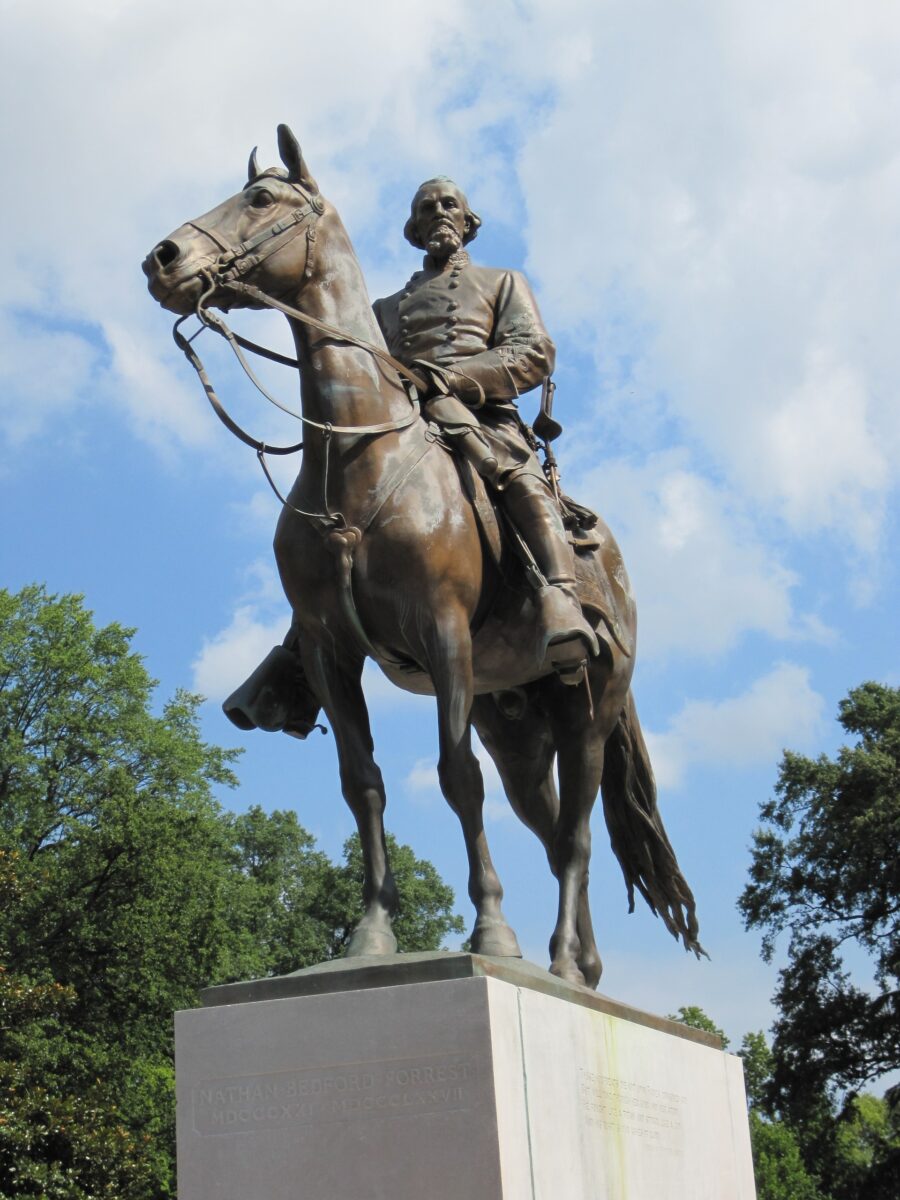
A statue of Confederate Gen. Nathan Bedford Forrest, a founding member of the Ku Klux Klan, on its former pedestal in Health Sciences Park in Memphis. It has been removed, along with the remains of Forrest and his wife, which were buried below. (Thomas R Machnitzki/Creative Commons 3.0)
Memphis has suffered other indignities at the hands of the state in the last decade.
For years, state officials blocked efforts by city leaders and residents to remove a statue of Confederate General Nathan Bedford Forrest — a founder of the Ku Klux Klan — from a city park.
When the city found a workaround in 2017, selling the park to a nonprofit which was then able to legally remove the monument, angry Republicans in the Legislature retaliated by stripping $250,000 in state funding that had been designated for the city’s bicentennial celebration.
Republican state Senator Brent Taylor, who represents the affluent, mostly white Memphis suburbs of Germantown and Collierville, has for the last few years been waging war on Shelby County’s district attorney, Steve Mulroy.
Mulroy is a Democrat who was elected in 2022 as a reformer, promising to change what he called racially discriminatory prosecutions in the county.
That kind of talk also angered Republicans in the Legislature, who are hostile to police and judicial reform in general. They have in recent years stripped citizen police review committees of any power.
This year, Taylor pushed through a bill aimed at Mulroy that will allow the state to remove a local district attorney if the state Attorney General finds a pattern of, basically, not charging enough people with crimes. Never mind the will of the voters who put Mulroy in office, who are clamoring for police accountability after the killing of motorist Tyre Nichols by Memphis officers in 2023.
And then last year came the deployment of the Tennessee National Guard to Memphis, over the objections of local officials, for an unprecedented assignment to assist with day to day local law enforcement. This came after the state had already given Highway Patrol officers increased enforcement powers in the city.
The National Guard force is part of President Donald Trump’s haphazard efforts at military occupation of Democratic-led cities, in some cases to help with immigration enforcement, and in others — like Memphis and Washington, D.C. — for broader policing purposes.
Governor Bill Lee and other state Republican leaders enthusiastically supported the plan, which is still in operation. They say it has dramatically reduced crime in Memphis.
But Memphis officials and community advocates point out that the decline in crime since the deployment last fall has continued a downward trend that was already clearly visible in the first three-quarters of 2025 — and that has also been seen in cities across the country with no National Guard troops on hand.
So, that’s where Memphis already was before the redistricting frenzy that the U.S. Supreme Court kicked off with its April 29 ruling in the Louisiana v. Callais case. A Black majority city in the South, still marked by centuries of racist rule and oppression, constantly kicked around, second-guessed, occupied, and overridden by an all-white state legislative majority.
The Callais decision, written by Justice Samuel Alito, made it harder to distinguish between gerrymandering for partisan gain — which the court declared perfectly fine in a 2019 case — and gerrymandering out of racial discrimination.
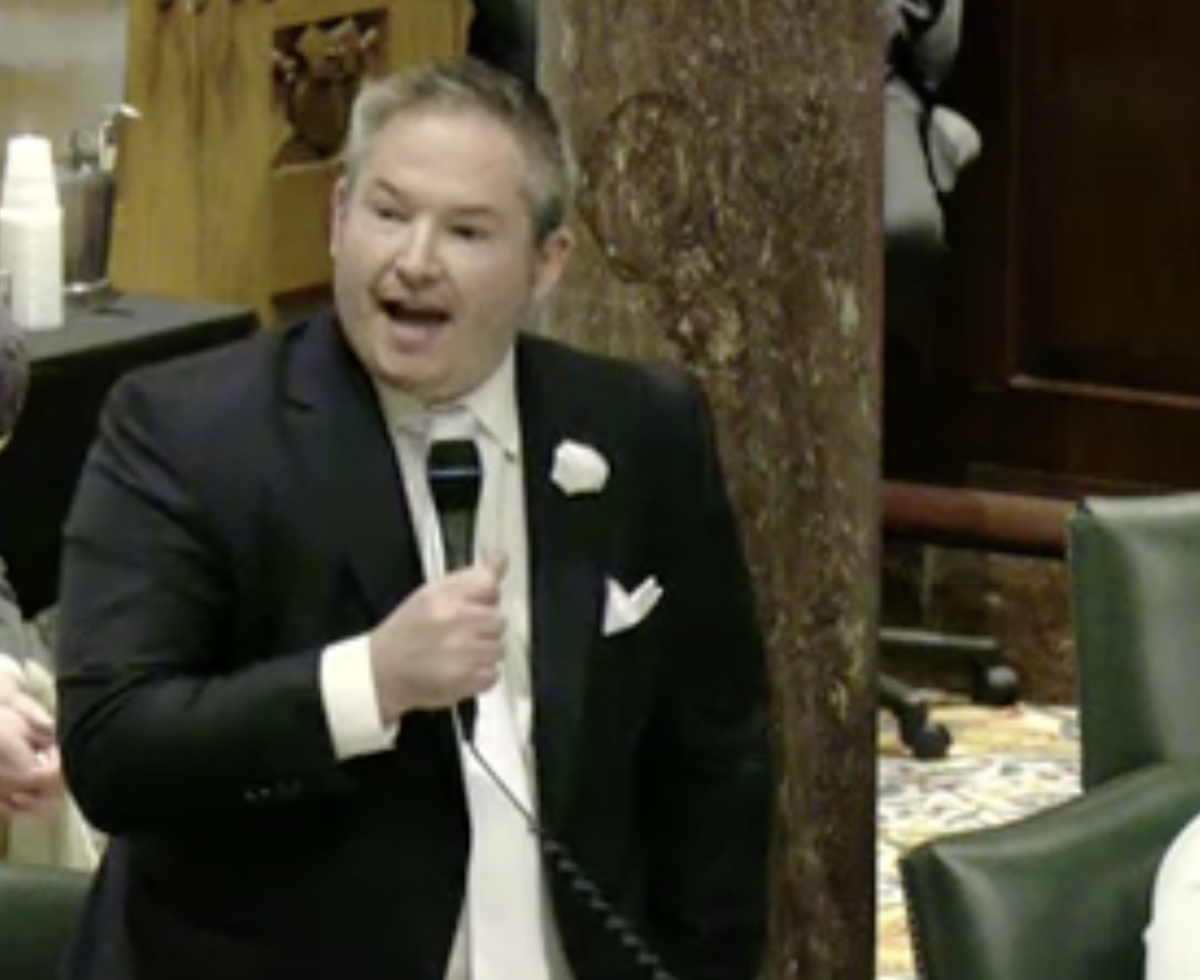
State Sen. Jeff Yarbro, D-Nashville, speaks on the floor of the Senate on May 7, 2026. (Video/Tennessee General Assembly)
It essentially says that it’s OK to draw political districts that dilute the voting power of racial minorities, as long as you say that it’s for partisan reasons.
Here’s how Tennessee state Sen. Jeff Yarbro, a Nashville Democrat, summarized the history of Black political power in Memphis, as the Senate debated the newly drawn congressional maps on May 7.
Yarbro: “We are trying to dress something up in political language, because that’s what Justice Alito’s opinion in Callais says: If we say we’re doing it for partisan reasons, then we can get away with it. Well, Mr. Speaker, we have been playing that game in this chamber for 150 years. I’m sure there are people who, when they proposed the poll tax, said it was for raising revenue with no racial intent at all. And the degree to which this type of project has been aimed at this community in particular for the last 150 years is shocking.
In the 1870s, Memphis first elected Black members to their city bodies. By the end of that decade, in 1879, this body, we took away, we revoked their charter. And they were a state-run taxing district for the next 15 years — until we changed their voting laws so they couldn’t actually elect African-American members. In the 1880s, they actually elected representatives to go serve in the state House. In 1889, we changed those rules, too, to make sure that those were at-large elections that African-Americans couldn’t win.”
He went on to bring the story into the current century, right up to the Legislature’s most recent actions.
Yarbro: “Once Memphis is electing black leaders, we changed the annexation laws. We changed to make sure that the cities didn’t grow, and to allow independent cities to exist. In the early 2000s, we passed an unconstitutional law to let all of the white communities in Memphis break away and create their own special school districts. And last week, or two weeks ago, Mr. Speaker, we in this body allowed the state to override the decisions of the locally elected school board. We put the locally elected DA under state supervision. We said that the Highway Patrol, instead of the Memphis Police, can enforce the streets. And every step along the way, there’s been a neutral justification. ‘This is about safety, this is about education, it’s about partisanship.’ But the project’s always been the same.”
‘We Already Know They Are Scared’
Within an hour of the Supreme Court publishing its decision, Tennessee Senator Marsha Blackburn took to social media to post an all-red congressional map of the state showing Memphis sliced up into pieces.
Blackburn, who is also running for governor this year, wrote, “I urge our state legislature to reconvene to redistrict another Republican seat in Memphis. It’s essential to cement @realDonaldTrump’s agenda and the Golden Age of America.”
The next day, Trump himself posted that he had spoken with Governor Lee, who had promised to redraw the map. And the day after that, Lee called the special session in Nashville, to begin on May 5.
On the first day of the session, the Legislature’s Democrats held a press conference outside the state Capitol to show solidarity in opposition to the redistricting plan. It was followed by a rally organized by the Tennessee Equity Alliance, a Black-led civil rights group that focuses on legislative advocacy and voter registration.
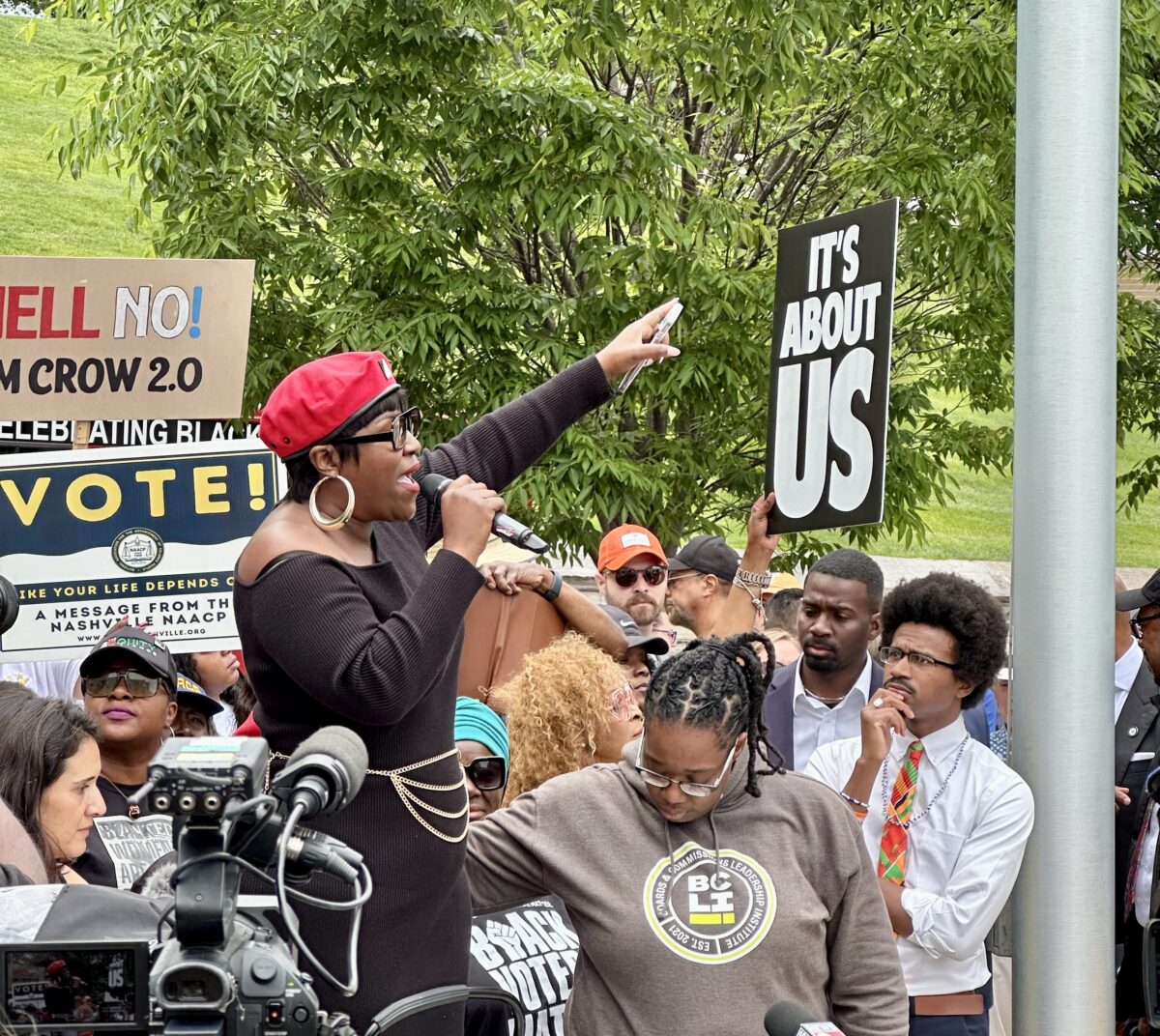
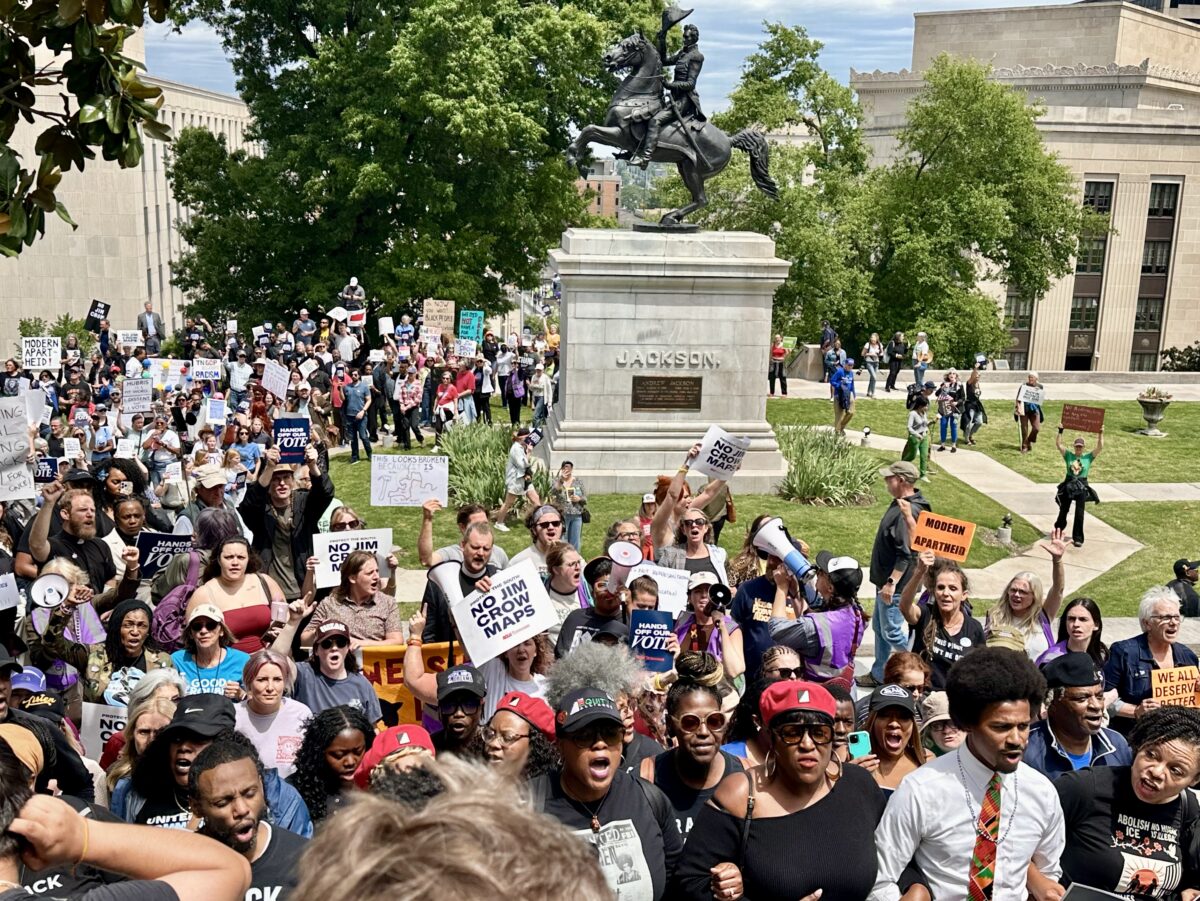
The rally drew a diverse crowd of hundreds — which felt sizable and boisterous, given that it was called on short notice on a Tuesday afternoon, while school was still in session. They carried signs, some homemade and some printed and handed out by organizers, saying “Protect the South” and “Hands Off Our Vote” and “No Jim Crow 2.0.”
Both Steve Cohen and Justin Pearson spoke, along with Nashville Mayor Freddie O’Connell.
Representatives of Planned Parenthood and the Tennessee Immigrant and Refugee Rights Coalition connected the attack on Black representation to the state’s ongoing assaults on reproductive rights and its immigrant communities.
Few were as fiery and to the point as Equity Alliance cofounder and CEO Tequila Johnson, who is a leading force for Black political organizing in Tennessee. The Equity Alliance ran a successful drive in 2018 called the Black Voter Project, which collected and submitted voter registration forms for 91,000 Black residents of Memphis, Nashville and Chattanooga.
Equity Alliance CEO Tequila Johnson fires up a rally outside the Tennessee State Capitol on May 5, 2026. (The Progressive South)
It was so successful that the state Legislature the next year passed a law to make such efforts harder. Citing the volume of work the applications created for election officials to verify their information, the law imposed penalties for large-scale voter registration efforts that produced too many incomplete or invalid forms.
But it was blocked by a court as unconstitutional, and was ultimately repealed by the Legislature in 2020.
Johnson was one of many speakers over the three days to invoke Memphis as the city where Martin Luther King Jr. gave his final speech and was murdered. She also noted the streets that surround the Tennessee State Capitol, which the city of Nashville has named for King, Rosa Parks, and Representative John Lewis.
Johnson: “Somewhere I read that the greatness of America is the right to protest for the right. And those words didn’t come from me. Those were the words of Dr. Martin Luther King Jr., spoken right here in Tennessee, spoken in Memphis, spoken the night before they thought they silenced the dream. And here we stand surrounded by John Lewis Way and Martin Luther King Boulevard — in the state that tried to silence the dream when they murdered him. But they didn’t know that dream done rained down, baby, and it’s all over me like water.
And let’s be clear, they not redrawing these maps just for politics. It’s about power, it’s about control, and it’s about fear — because we already know they are scared. So let me ask you all this question plainly: Why are they so afraid of Black political power? Why are they so afraid for Black folks to be able to show up at the polls? Why are they so afraid of Black representation? Y’all, it’s because when you come from the bottom, when you got a foot on your neck, when you stand up, everybody gonna rise with you. Immigrant communities are going to rise with you. Working-class folks are going to rise with you. And they know, when Black folk go to the polls, we put our heels on and everybody rises with us. So they better be goddamn scared.”
Johnson’s energizing rhetoric was matched by Pearson, who closed out the rally and fired up the crowd before leading it in a slow march up the Capitol steps and into the building where the three-day session would play out.
Pearson: “We are here because the white supremacist domestic terrorist president of the United States has gotten Republicans to capitulate to the annihilation of our democracy. But we still here. We are here because they know they can’t win, so they gotta cheat and steal. We’re here because they’re seeking to silence the voices of the only majority Black district in the state of Tennessee. We’re here because we still believe in the values that were espoused in the founding documents of this nation — that we hold these truths to be self-evident, that all people are created equal and endowed by their creator with certain inalienable rights; and that among these are life, liberty, and the pursuit of happiness. See, we are here.“
Even as he invoked the Declaration of Independence, Pearson drew a straight line from the inequities baked into the U.S. Constitution to the current wave of disenfranchisement, citing the 3/5ths compromise — which counted enslaved people as partial residents, for purposes of granting more congressional representation to the slave states, even though they had no voting rights.
He also noted that the redistricting itself was illegal under a Tennessee law that had stood since 1972, which prohibited redrawing congressional districts except every 10 years after each Census. The Legislature’s first order of business during the special session was to delete that section of the law.
And Pearson warned that the congressional districts are just the start. The Supreme Court decision also opens the way in future years for the Legislature to redraw state legislative districts, and marginalize Black voices there as well.
Pearson: “This racist redistricting is an attempt to have a new 3/5ths compromise: Count the bodies for representational participation in Congress, but deny the agency and the humanity. This is where we are today in America. This is where we are today in Tennessee, and across the South. Alabama, Mississippi, Louisiana, all are seeking to find ways to destroy Black political power, and we have to fight back, we have to fight back, we have to fight back. Because the reality is there’s an intersectionality of our justice, that if Tennessee, Mississippi, Alabama, Louisiana — if we don’t fight together now — we will see the greatest dilution of Black political power since the end of Reconstruction, hear me now.
A crowd of protesters marches up the steps of the Tennessee State Capitol, past a statue of President Andrew Jackson. (The Progressive South)
They’re looking to take at least 12 seats from the United States Congress that have majority Black districts like ours in Memphis. And there are 200 state seats in the House and the Senate held by Black folk that they’re seeking to take. Today in this special session, they’re talking about taking our district, District 9, back home in Memphis. But tomorrow they’re going to be talking about taking all of our representation, in Nashville and Memphis and Shelby County and Chattanooga and across the state.
Let us understand that this theft of political power that they are executing is a part of Project 2025. Nothing that is happening is accidental or coincidental. This is intentional political deprivation for their own purposes, even against our own state statutes that say you should not have any redistricting in between the apportionments, in between the census. So they’re going to have to change state law to cheat. And this is going to happen in state after state after state. And we have to show up resisting, and resisting, and persisting, and resisting.”
‘I’m Not Aware’
Inside the Capitol, during all three days of the session, protesters packed the hallways, holding signs and chanting. They also crowded the galleries of the House and Senate, although they were cleared out of both at various points for making noise and disrupting the proceedings.
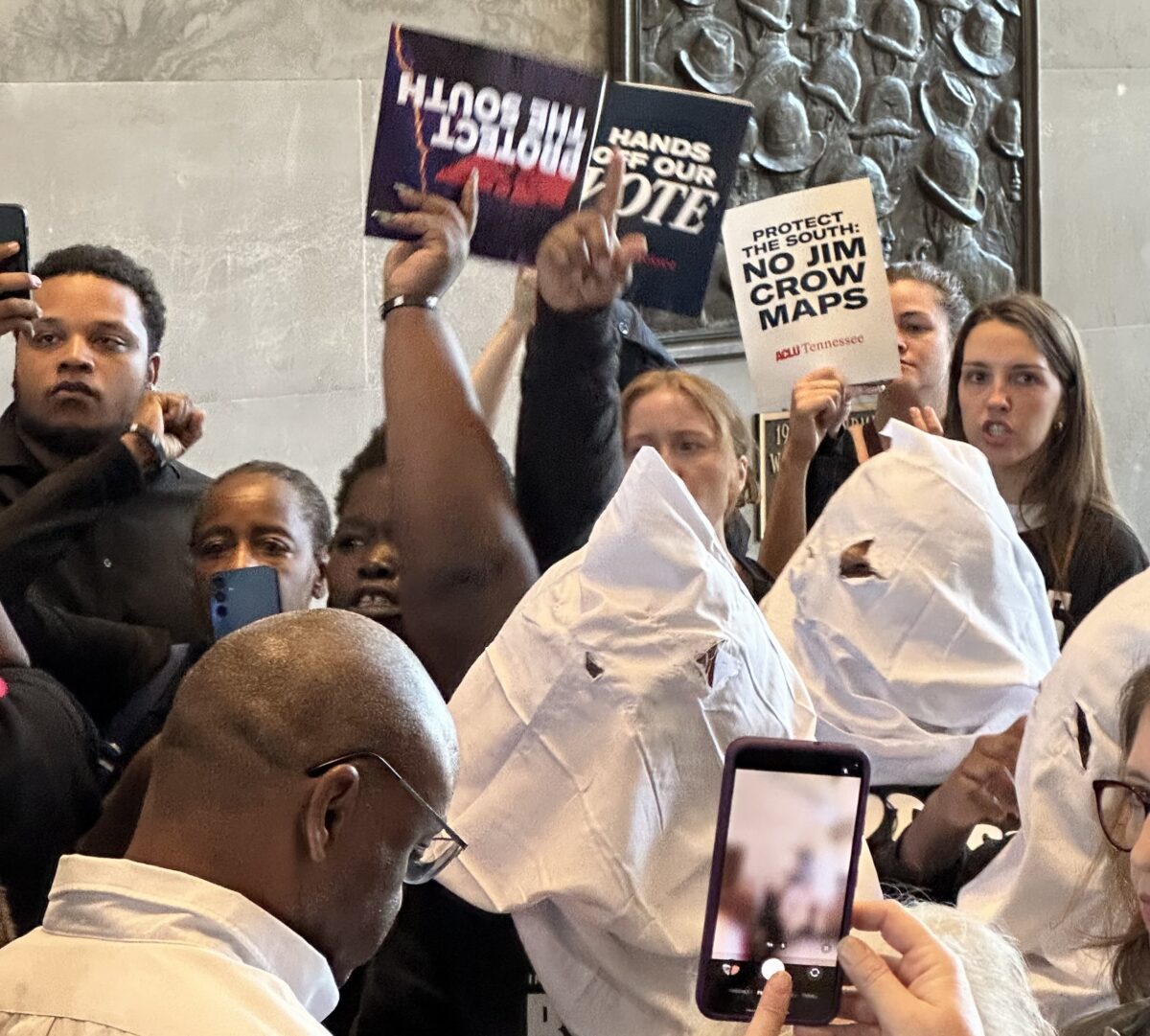
Protests reached a crescendo on the final day, as both chambers moved toward approval of the new maps. At one point in the hallway, a group of Black activists donned white hoods made of pillowcases with eyeholes cut in them and paraded through the crowd carrying a rope, chanting, “Don’t lynch the Black vote!”
Meanwhile, during committee meetings and the final floor votes, Democratic representatives and senators questioned, cajoled, implored, and beseeched their supermajority colleagues to consider the history and value the voices of Memphis’ Black community.
But they couldn’t even get them to acknowledge that Memphis has a Black community. One of the persistent features of the special session was a studied — and plainly, obviously, contemptuously dishonest — refusal by Republicans to even utter the words “race” or “Black” or “African-American.”
This was a legal strategy.
Inside the Capitol, Black activists donned white hoods and carried a rope to symbolize the “lynching” of the Black vote. (The Progressive South)
Under the Callais ruling, a key element of proving discrimination is whether anyone ever expressed racial animus as a reason for the map. So Tennessee Republicans were reticent to the point of absurdity about mentioning race at all, repeatedly denying that they knew anything about the racial demographics of the district.
Their professions of ignorance were so ludicrous that they often provoked laughter from observers.
Here’s an exchange, for example, between state Representative Jesse Chism, a Memphis Democrat, and Republican House Majority Leader William Lamberth:
Chism: “I’m trying to catch up here, I may not be as smart as some of some of the rest of us, so I’m just going to ask some really simple questions. So, Memphis is a predominantly African-American city, is that correct?“
Lamberth: “I’m not privy to those demographics, I don’t know.“
And here is Memphis state Senator London Lamar questioning Republican Senator John Stevens. (By the way, that’s my own state Senator and Lieutenant Governor Randy McNally running the proceedings and wielding the gavel.)
Lamar: “Are you aware that Memphis is predominantly African-American?“
McNally: “Senator Stevens, to respond.“
Stevens: “Thank you, Mr. Speaker. I am not.“
McNally: “Senator Lamar.“
Lamar: “Thank you, Mr. Speaker. So, to my sponsor, who went to law school at the University of Memphis and lived there for three years, you’re telling me you’re not aware that Memphis is predominantly African-American? Am I correct?“
McNally: “Senator Lamar, he’s answered that. Next question, please.“
Lamar: “Is the sponsor aware that Shelby County is predominantly African-American?“
McNally: “Senator Stevens.“
Stevens: “Thank you, Mr. Speaker. I’m not aware.“
McNally: “Senator Lamar.“
Lamar: “Are you aware that Tennessee’s 9th Congressional District is the only majority African-American congressional district in this state?“
McNally: “Senator Stevens.“
Stevens: “Thank you, Mr. Speaker. No, I have no knowledge of that.“
And so it went.
One of the fiercest appeals in the closing minutes of the session came from Nashville state Senator Charlane Oliver, the cofounder of the Equity Alliance. She was elected to the Senate in 2022 and is running unopposed this year for a second term.
As she rose to speak, cheers of support came from the chamber’s galleries.
Oliver: “I rise today with a heavy heart, but with ice in my veins. There are people watching today who are descendants of people who were beaten on bridges, jailed in courthouses, murdered in churches — not for committing crimes, but for trying to vote, for trying to have a say in who represents them, for trying to be counted as full human beings in a democracy that was built in no small part on the forced labor of our ancestors. Those people are watching today, Mr. Speaker, and I want them to know if you are watching, I hear you, I see you, and I feel you, and I will not be silent today on your behalf.
“We have come to this special session like it’s business as usual. There is nothing normal about what we are doing this week, nothing normal about what we are doing today. What has bothered me the most this week is we have a body predominantly made up of people who will never know what it’s like to have your rights taken away. You will never know what it’s like to struggle. You’ve never known what it’s like to have to have the talk with your son, because of laws you pass (that) prey on Black boys, how to act when you get pulled over by the police. You’ll never know what it’s like to have the conversation with your daughter, because her hair grows a little different out of her head, like your daughter’s. And I have to tell her, ‘Don’t let nobody touch your hair. That is our crown.’
“You will never know what it’s like, because it’s always been given to you. You’ve never had to struggle to be seen not as 3/5ths of a human, but as a full person with self agency in this country.
“I also want to acknowledge my colleagues on the other side of the aisle. I know most of you. You speak to me in the hallways. I’ve gotten to know some of you, and I know you go to church on Sundays. I know you love your families, just like I do, and I know you believe you are good people. And that is precisely why what I am saying to you right now matters the most. Because ‘good people’ — people who go to church, people who love their families, people who believe they’re good — have throughout the history of this country done deeply, profoundly wrong things to Black Americans. And they told themselves it was about something else. They told them that it was about economics, heritage, party, patriotism. It was never about something else. And today, it’s not about something else.”
Oliver was the last speaker in the Senate before the final vote was called on the new map — although it took about five minutes for that to happen because of chants and singing from the galleries, which McNally ordered cleared.
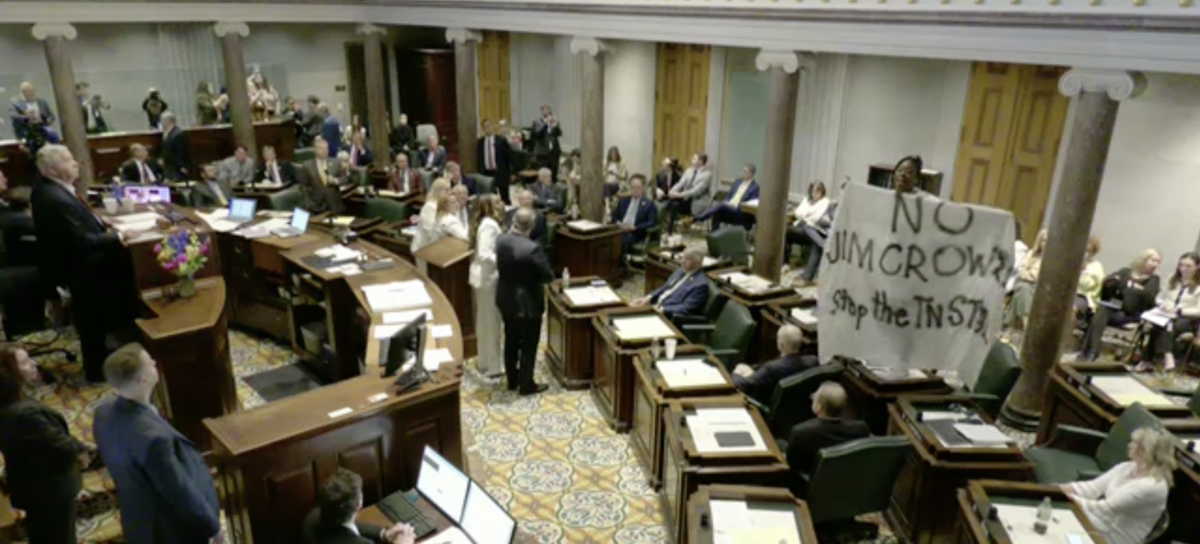
In the meantime, Oliver climbed atop her desk and unfurled a white sheet hand-painted with the words “No Jim Crow.” She sang “Lift Every Voice and Sing,” the hymn of deliverance written in the early Jim Crow era by the Black activist brothers James and J. Rosamond Johnson, adopted by the NAACP as the unofficial “Black national anthem.”
Senator Charlane Oliver, right, stands on her desk with a sheet painted with the words “No Jim Crow” as the state Senate prepares to cast it its final vote on the congressional maps on May 7, 2026 (Video/Tennessee General Assembly)
Other Democratic senators stood in the well of the Senate in front of the speaker’s desk, in protest of the vote.
Similar scenes played out in the state House during its final vote on the maps, with Democratic members locking arms in the well and some of them exiting in protest. Out in the hallway, state Representative Justin Jones of Nashville set fire to an 8 1/2-by-11 inch printout of the Confederate flag.
With the votes recorded, the Republican leadership of both chambers quickly adjourned the special session. Its outcome was never in doubt.
Last week, with legislators safely scattered back to their home districts, House Speaker Cameron Sexton sent letters to Democratic House members reprimanding them for what he called disruptive behavior during the special session. He told them he was removing them from all standing committees and subcommittees for the remainder of the year.
The Legislature is done with its business for 2026, but there are still some regularly scheduled committee meetings in the fall. What Sexton’s notice means is that at any of those meetings, the more than 1.6 million Tennessee residents represented by Democratic House members will have no voice at all.
Democratic state Representative Gloria Johnson of Knoxville — also my own representative — said that the committee removals were of a piece with the carving up of Memphis. “This Speaker is a one trick pony,” she wrote on social media. “His only move is erasing representation.”
Making Memphis ‘Matter’
For years, one common trope among white conservatives in Tennessee — lamenting the state’s persistently poor rankings in wealth, health, education, and crime — has been how much better off the state would be if it could just get rid of Memphis.
Congressman Cohen mentioned this during his remarks at the rally before the special session began. He said that during his time in the state Legislature, before he was elected to federal office, he used to hear from his colleagues that they wished they could move Memphis across the state line to Mississippi.
The notion reared its head again during the Legislature’s regular session, in the debate over the state takeover of Memphis-Shelby County Schools.
This time it was Republican state Senator Adam Lowe, who represents a cluster of rural counties in East Tennessee — although he referenced moving Memphis into its other neighboring state.
He cited a phrase that had been turned into a hashtag by Republican Senator Brent Taylor, the white conservative from the Memphis suburbs: “Make Memphis Matter.”
Here’s what Lowe said, in supporting the school takeover.
Lowe: “For a long time in East Tennessee, the joke has been that the best way for Tennessee to excel and to improve the issue of crime and improve the issue of education would be to give Memphis to Arkansas. And then I get up here in the Senate, and my colleague from Shelby (County) comes up here with a phrase, ‘Make Memphis Matter.’ And he makes a true believer of me. And I take that back to East Tennessee, to my district, and that joke has subsided. People care about Memphis now more than ever on the other side of the state.”
That prompted a swift rebuke from Memphis state Senator Raumesh Akbari, who is the Democratic leader in the Senate. She bristled at the implication that the city only matters when the state’s white majority decides to value it.
Akbari: “Thank you, Mr. Speaker, and I am out of order, but I am offended by what was just said about Memphis and Arkansas. Memphis has always mattered. It always will matter to the people who are down there. And I am excited that the General Assembly is suddenly interested in that, but I think it is unfair to the people who live in that city, who send their tax (dollars) up to this state to say something like that.”
Akbari returned to the theme at the close of the special session just a few weeks later.
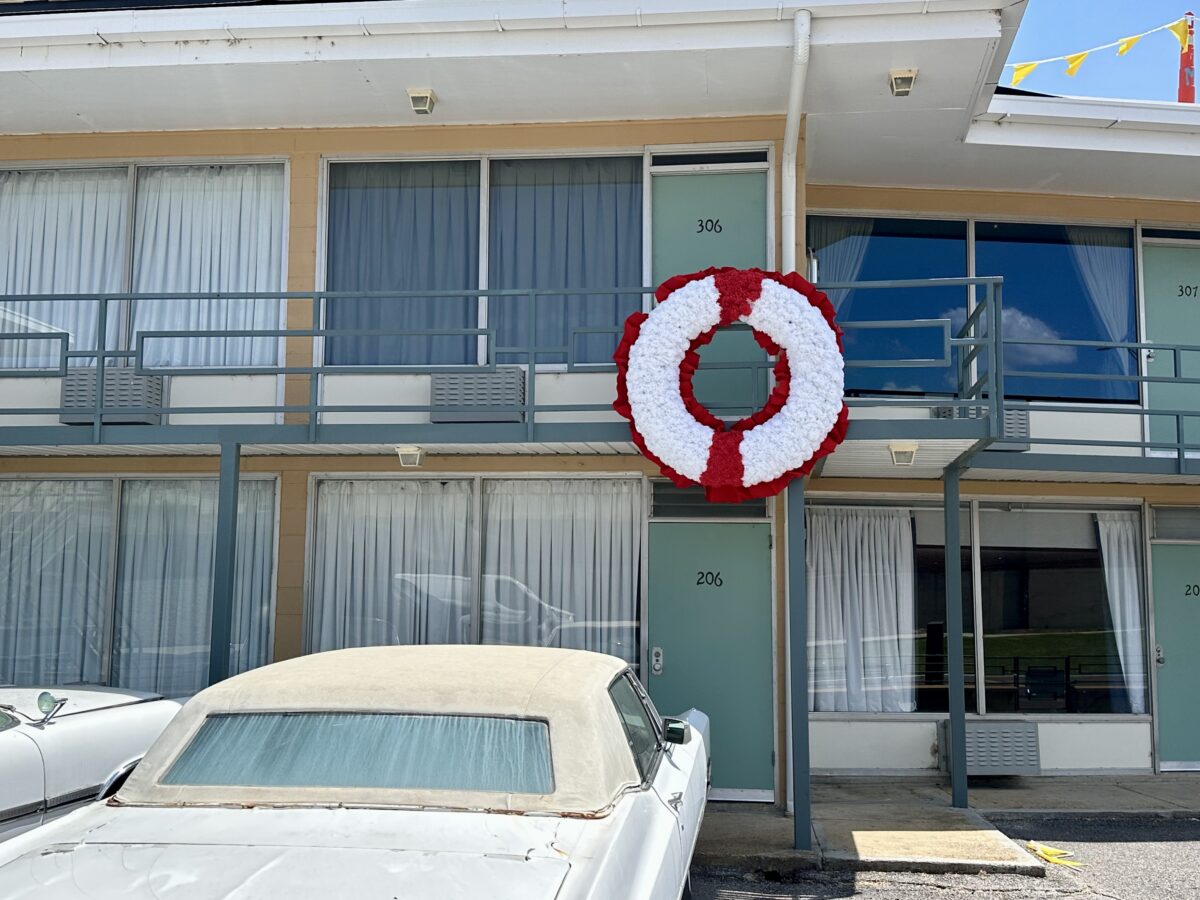
Akbari: “What is being proposed right here is not just a redrawing of districts. It is the breaking apart of a people. It is the fracturing of a history. It is the dilution of a voice that generations of people bled for, that marched for, that prayed for, that died to build. Memphis is a city of sanitation workers that proudly proclaimed, ‘I am a man.’ Memphis is not an accident on a map. Memphis is the balcony where the Reverend Dr. Martin Luther King was assassinated. Memphis is a place where he took his last footsteps. Memphis is sacred ground in our civil rights story and American history.
The balcony at the Lorraine Motel in Memphis — now the National Civil Rights Museum — where Martin Luther King Jr. was assassinated. (The Progressive South)
“And now, barely a few days after the Supreme Court weakened what remained of the historic Voting Rights Act, this Legislature rushes to carve up a the very community where Dr. King gave his life fighting for dignity, economic justice and the rights of the oppressed. A city that is 64 percent Black, a congressional district that is 61 percent Black, and somehow we are supposed to believe that the dismantling of this district has nothing to do with race. It has nothing to do with those voices being allowed to have power, to be allowed to remain loud, and to matter.”
Now, rather than constituting a majority, the Black residents of Memphis will make up 25 to 30 percent of three majority-white districts that snake for hundreds of miles across multiple counties.
One of those, the new 9th District, runs along the southern border of Tennessee before curling up to end in the affluent Nashville suburbs of Williamson County — the richest county in the state, home to both Lee and Blackburn.
Along the way, it takes in the small city of Pulaski, which is primarily notable for two things. It is home to the University of Tennessee’s UT Southern campus, the smallest school in the state system. And on Christmas Eve, 1865, it is where the Ku Klux Klan was founded.
The district also happens to take in the home of none other than state Senator Brent Taylor — the Memphis antagonist now positioning himself as its white savior. He was the first Republican to announce that he is running to represent the new district.
The progressive news site Tennessee Holler said, “It was never about making Memphis matter. It was about making Brent Taylor matter.”
In the wake of the redrawn districts, Cohen abandoned his campaign for reelection to Congress. But Pearson is still running to represent the new district, even though the odds are obviously and deliberately stacked against him. Memphis state Senator London Lamar has also gotten into the race.
The challenge in Tennessee now for them, and for any aspiring young Black leaders, will be a landscape of districts that are clearly racially gerrymandered, no matter what the federal courts might say.
They could even end up being displaced from the legislative districts they currently represent.
The NAACP and the ACLU have filed suits over the new congressional maps, alleging that they are racially discriminatory. They will be among the first suits to test the boundaries of the Callais decision and how the federal courts will interpret it.
The Threat of Black Power
But states across the South seem confident that they will be able to draw many of their Black-majority districts out of existence, without court interference. Even as the dust was settling on Tennessee’s new maps, Louisiana and Alabama were plunging ahead with their own redistricting.
Both look likely to eliminate at least one Black-majority district.
Republicans in Mississippi, South Carolina, and Georgia have all urged their own redistricting efforts, although at the moment none have committed to doing it this year. They almost certainly will before 2028.
None of this would be a surprise to Ida B. Wells.
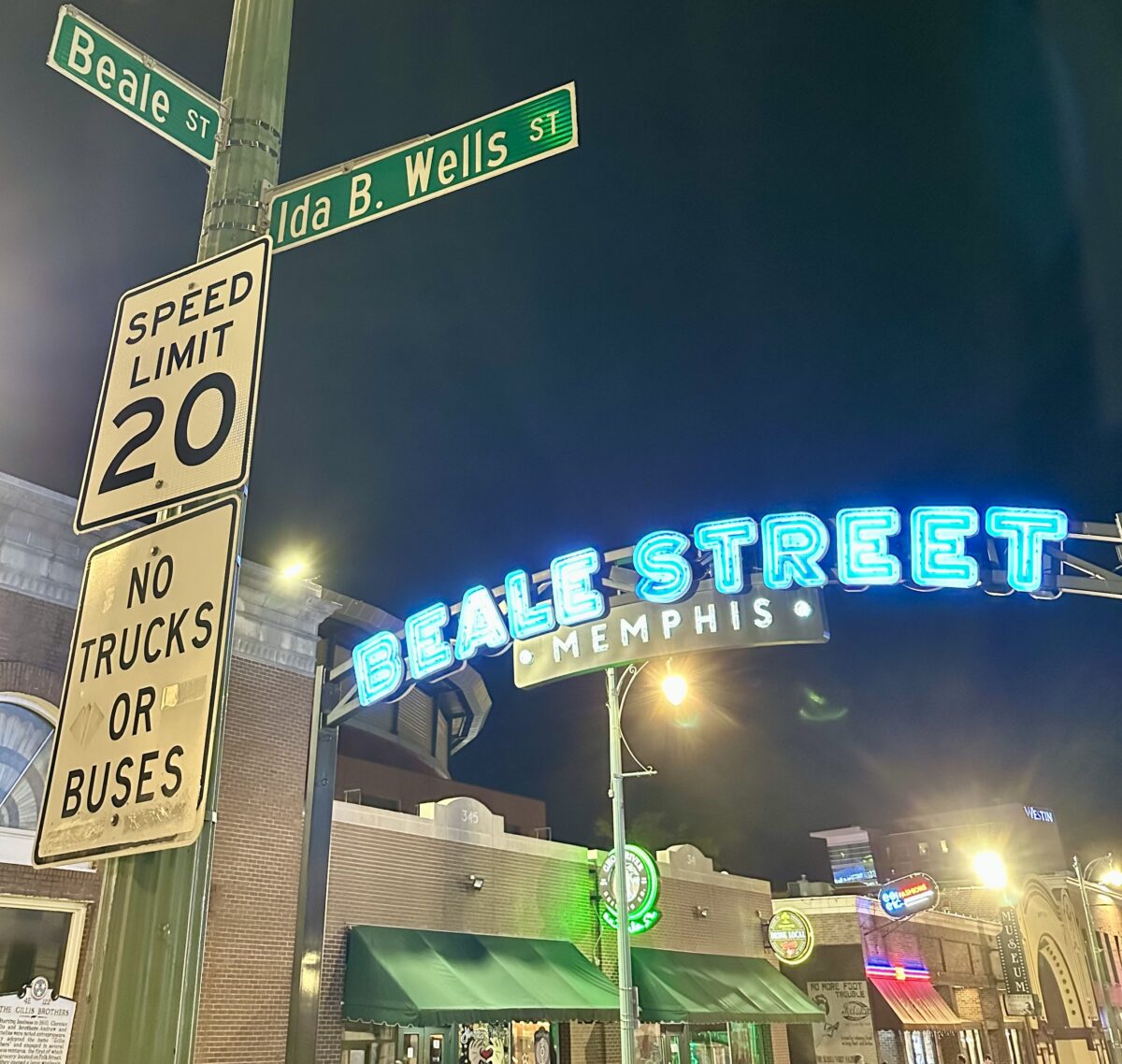
Hers is another name you can find on historical markers and monuments in Memphis. Wander down Beale Street, through the heart of the pedestrian-only tourist district, full of blues clubs, barbecue joints, and neon lights, and turn the corner at Wet Willie’s daiquiri bar.
There is a placard with her name at the top. It says, “Ida B. Wells crusaded against lynchings in Memphis and the South. In 1892 while editor of the Memphis Free Speech, located in this vicinity, she wrote of the lynching of three Black businessmen. As a result, her newspaper office was destroyed and her life threatened.”
Wells — known as Ida B. Wells-Barnett later in her life, after she was married — is of course a major figure in American history and journalism history. As the placard says, she wrote fiercely about the growth of lynching in the South after the Civil War as a means of enforcing white dominance.
The intersection of Ida B. Wells Street and Beale Street in Memphis. (The Progressive South)
The lynching the marker mentions involved the Black proprietors of a popular local store, the People’s Grocery, that served Memphis’ large and growing Black community in the 1890s. They were close friends of Wells. But they were resented by the white owner of another nearby store, who didn’t appreciate the competition.
The series of events that led to their murders and the looting of their store by a white mob are well documented many places, including in Wells’ terrific autobiography, Crusade for Justice.
Nobody was arrested for the three murders. But they created outrage in the Black community that led to months of activism, including the boycott of white-owned businesses. Many Black Memphis residents chose to leave the city entirely. Some white households discovered they could no longer easily find domestic labor.
And in a foreshadowing of the bus boycott in Montgomery, Alabama, 60 years later, Black Memphians stopped riding the local streetcars.
The streetcar operators came to visit Wells at her newspaper office and beseeched her to encourage her readers to start patronizing the system again, because they were struggling to survive financially without Black riders.
She told them calmly that the anger was likely to persist until somebody was held to account for the killings.
The Free Press continued to report on lynchings across the state and the South. About three months after the People’s Grocery murders, Wells wrote a scathing editorial that took apart the persistent myth used to justify lynchings — that Black men were raping and assaulting white women.
She wrote, “Nobody in this section of the country believes the old threadbare lie that Negro men rape white women.” In fact, she added, to the degree that there were any interracial relations, they were consensual — meaning that white women were acting of their own volition.
The editorial created a firestorm both metaphorically and literally. Wells was out of town when it was published. The local white-owned newspaper, the Memphis Appeal, wrote an editorial of its own, thundering that “there are some things that the Southern white man will not tolerate, and the obscene intimations of the foregoing have brought the writer to the very outermost limit of public patience.”
That night, another white mob descended on Wells’ newspaper office, smashing the printing press and setting fire to the building. Wells elected, probably wisely, not to return to Memphis. She settled in Chicago, where she continued her journalism and civil rights activism until her death in 1931.
Memphis has come to recognize and honor Wells’ legacy in recent years. Besides the historical marker, the section of 4th Street that runs near the site of her former newspaper office has been named Ida B. Wells Street.
And a plaza in her honor is under construction at that intersection, featuring a statue of her. Among the corporate supporters of the project is the Memphis Commercial-Appeal — the now Gannett-owned newspaper that is the descendant of the paper that called for Wells to be punished.
These are all superficial indicators, at least, of the degree to which Memphis has changed since the 1890s. Wells would perhaps appreciate them.
But she would no doubt have some other thoughts about the creation and then the dismantling of a Black-majority congressional district. She lived through Reconstruction after the Civil War, and then watched its brief gains in Black political power systematically stripped away by white state governments across the South.
Writing in her memoir about the sacking of her newspaper office, Wells said that in its immediate aftermath she believed that it had been primarily caused by her editorial. But over time, she came to see it as something deeper — a deliberate response to what the newspaper and the Black reaction to the People’s Grocery murders really represented.
She wrote, “I know now that it was an excuse to do what they had wanted to do before but had not dared because they had no good reason until the appearance of that famous editorial.
“For the first time in their lives, the white people of Memphis had seen earnest, united action by Negroes which upset economic and business conditions. They had thought the excitement would die down; that Negroes would forget and become again, as before, the wealth producers of the South — the hewers of wood and drawers of water, the servants of white men.
“But the excitement kept up, the colored people continued to leave, businesses remained at a standstill, and there was still a dearth of servants to cook their meals and wash their clothes and keep their homes in order, to nurse their babies and wait on their tables, to build their houses and do all classes of laborious work.
“…In casting about for the cause of all this restlessness and dissatisfaction, the leaders concluded that The Free Speech was the disturbing factor.”
Wells’ great crime, in other words, was not the supposed besmirching of white women’s virtue. It was the infrastructure she provided for the building of Black power.
Something white Southern conservatives have never been willing to countenance for long.
When the all-white Republican supermajority in the Tennessee Legislature carved up Memphis into three congressional districts during the first week of May, they insisted that race had nothing to do with it. But when it comes to Memphis, race always matters. This week, we listen to the voices raised in protest during Tennessee’s rapid-fire special session, and put them in the context of the long and often ugly history of the state’s treatment of its largest Black-majority city. From violence by white mobs after the Civil War to the murder of Martin Luther King Jr. to the ongoing occupation of city streets by National Guard troops, Memphis has always been on the front lines of attempts to build Black political power — and to knock it down.
The U.S. Supreme Court’s decision last week in the Callais case is likely to lead to a major loss of Black representation across the South. Louisiana Gov. Jeff Landry immediately suspended the state’s pending congressional primaries to redraw its maps. Other Republican officials in states including Mississippi, Tennessee and Georgia are calling for reducing or eliminating their Black-majority districts. This week we look at the ruling and its implications.
Our interview is with South Carolina writer Rick Pidcock, who grew up in the conservative evangelical movement and has become an astute observer and critic of it. As a columnist for Baptist News, he has been raising alarms about the ongoing growth of Christian nationalism.
Plus: a look at this weekend’s inaugural Latido Festival in San Antonio, a celebration of Tex-Mex music and culture.
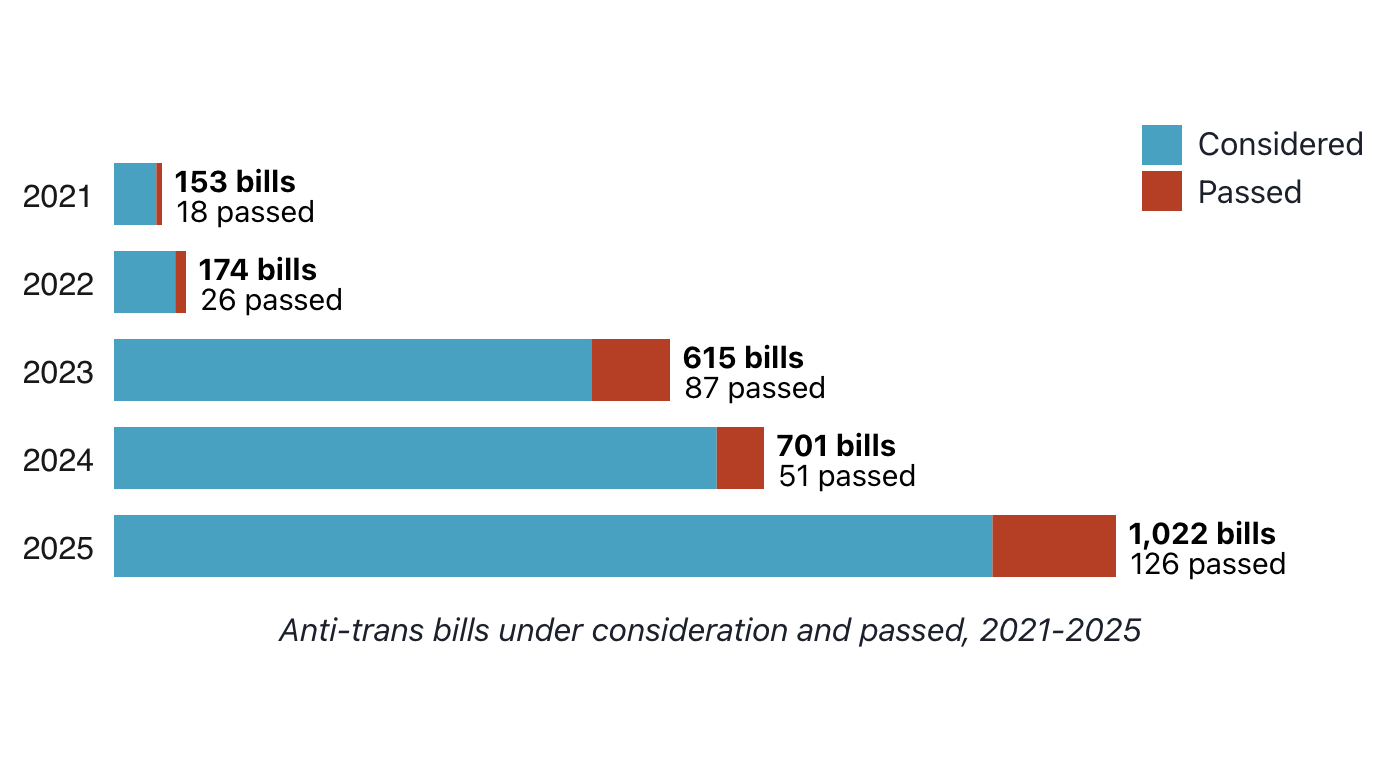
Another year, another cluster of hateful anti-transgender bills proposed in our state legislatures. This week, we round up some of the worst laws passed this spring in Southern states to further bully and harass trans people. In states like Tennessee and Georgia, this year’s bills are no longer only aiming at issues like sports and bathroom access, but are aiming directly at the presence — or even the mention — of trans people altogether.
In happier news, we also check in on this weekend’s Breaux Bridge Crawfish Festival in Louisiana. (Chart from TransLegislation.com)
The world’s richest man enjoys subservience from Southern lawmakers, while wreaking havoc on the earth, air and water.
Thermal drone imagery captured by Floodlight in late January shows some of the 15 permitted turbines operating at xAI’s Colossus 1. (Evan Simon / Floodlight)
Everyone is tired of hearing about Elon Musk. But he continues to have an outsized impact globally, nationally, and also specifically in several Southern states.
The theoretical richest man in the world is worth an estimated $840 billion or so at the moment, and in the near future he may become the world’s first trillionaire. That gives him a lot of power, obviously, and that power is compounded in the United States by his close ties to the current Republican Party.
One result is that in Republican-dominated states, including much of the South, the political leadership tends to be deferential to Musk, if not outright subservient to him. And he is taking advantage of that in several ways.
For example, let’s take a look at Austin, Texas, where Musk’s Tesla company opened a manufacturing plant in 2021. Gigafactory Texas, as the facility is known, was originally projected to employ 60,000 people — and in return, received a local tax break of up to 80 percent off its property tax bills. The incentive is worth about $14 million over 10 years.
But the factory has never come anywhere close to 60,000 employees, peaking at a bit over 20,000 employees before a slowdown in Tesla sales led to job cuts in 2024 that was one of the largest mass layoffs in Austin history, and even further cuts in 2025.
By the end of last year, there were about 16,500 employees at the plant. Meanwhile, the Texas Tribune reported last week that the plant continues to increase its water usage, surging to about 550 million gallons last year — making it the third-largest customer of Austin Water, the city-owned local utility.
This growing demand from Tesla has come as Central Texas is experiencing an ongoing drought, compounded by the growth of the Austin metro area in recent decades. Local residents are currently under water-use restrictions that limit them to watering their lawns or gardens no more than twice a week, and those rules could become more severe if the area moves from a Stage 3 to Stage 4 drought, as many experts predict.
Paul DiFiore, an environmental attorney who sits on an Austin water task force, told the Tribune, “It’s extremely alarming. All of a sudden, they’re using more water than the vast majority of people in the city.”
None of that has hampered Musk’s plans to add even more demand to the system. In March, he announced a forthcoming semiconductor fabrication plan near the existing factory, which will require even more water — potentially billions of gallons a year.
——-
Water is also an issue at another Musk project — the controversial XAI data center in Memphis, Tennessee. We’ve talked about this before, in the context of air pollution associated with gas turbines that Musk built — apparently illegally — to help power the massive computing facility, which is aptly named Colossus.
But Colossus also requires water — lots of it — to keep the supercomputer from overheating.
The original plans for the project that Musk and his team presented to state and local officials called for a huge water recycling plant, to allow it to reuse the same water over and over and minimize its impact on local resources.
But on April 9, local Memphis media reported that company officials said the water plant was paused in definitely, while work continues on building the second phase of the project, known as Colossus 2.
XAI and Musk said they weren’t canceling plans for water recycling, just delaying them while proceeding with “more immediate projects at the site.”
In at least the near term, though, that means the plant will be drawing billions of gallons a year directly from the same aquifer that serves the residents and other businesses of the Memphis metro area.
Memphis Mayor Paul Young, who has supported XAI despite the opposition of many local residents and environmental organizations, posted concerns about the delay, saying, “Promises to this community are not optional. A wastewater facility is about protecting our water and our future. I will continue pressing xAI to deliver.”
Despite all of that, in the last two months XAI has gone ahead and filed for local permits for its Colossus 2 expansion plans.
——-
Meanwhile, just two miles across the Mississippi state line from Memphis, another XAI data center is also facing complaints about air pollution and gas turbines.
The company’s new center under construction in Southaven, Mississippi, was heralded in a press release this past January by Governor Tate Reeves, who said it “sets the pace for continued high-tech investments across our state and strengthens Mississippi’s position as a leader in this exciting tech revolution.”
Of course, data centers are not in and of themselves great economic drivers. They can employ hundreds of people during construction, but once they’re up and running they have small staffs relative to their outsize impact on local utilities and the environment.
And those impacts are already showing up in Southaven. As at the center in Memphis, thermal imaging with drones has shown more than a dozen gas turbines operating from flatbed trailers at the site, all without state permits.
State regulators have said the turbines being on trailers makes them temporary, and therefore not in need of air pollution permits. But the Environmental Protection Agency has already ruled against that interpretation in Memphis.
In an investigation by the climate-focused journalism site Floodlight, former EPA air enforcement chief Bruce Buckheit said the Mississippi turbines are in clear violation of federal law.
XAI did not respond to the outlet’s request for comment.
The NAACP filed a lawsuit last week against xAI over the operation of the turbines.
——-
Air and water aren’t the only elements Musk is disturbing in his marauding across the South. In Nashville, local residents are worried about the ground, too.
Specifically, the limestone underlying what geologists call the Nashville Basin, and all of the buildings and infrastructure that sit on top of it.
Last year, Musk and state Republican officials announced with much hoopla something called the Music City Loop — an underground tunnel that is planned to run between downtown Nashville and the city’s airport about 13 miles to the east.
It is modeled on an existing loop built in Las Vegas by Musk and his Boring Company. Like that one, the Nashville loop will be for the use only of chartered Teslas, which will drive paying customers into town or out to the airport and bypass the often congested local interstates.
It was announced with almost no serious planning or analysis of the underlying terrain. The state granted the company permission to start digging from a state-owned site downtown, and work commenced almost immediately.
Nashville residents and city officials have raised questions and concerns ever since, about both the benefits of the loop — which they say will mostly serve tourists — and the potential complications of constructing such a long tunnel beneath densely populated areas and busy highways.
Among other things, they have cited more than 800 environmental violations allegedly committed by the Boring Company in its Las Vegas project. In March, the Nashville Metro Council approved a resolution opposing the project on a 20-15 vote.
But the locals have little authority over the project, which is mostly using state right-of-way. And last week, the Tennessee General Assembly voted to create a new state board just to oversee the Nashville loop project, with all members appointed by the state’s Republican leaders.
During discussion of the bill, Democratic State Representative Justin Jones of Nashville said, “We are bending state law to serve the whims of one man against the interests of Nashville.”
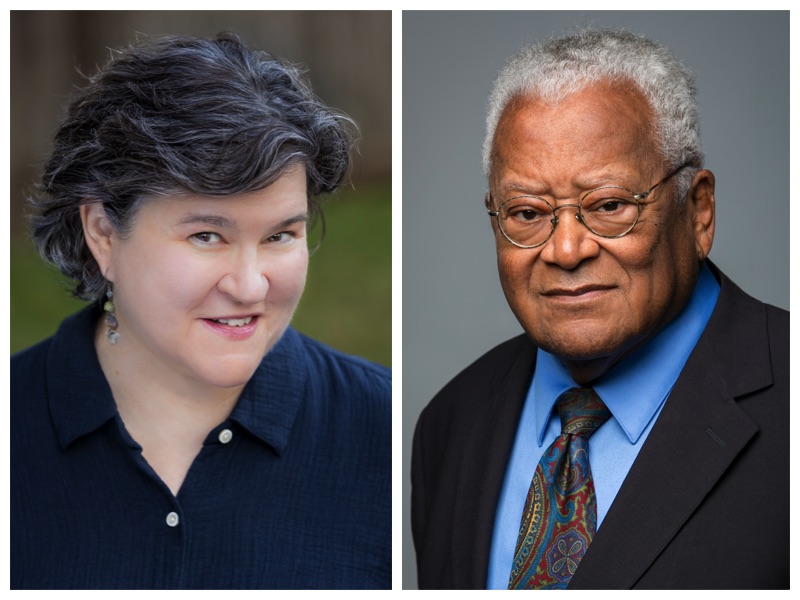
Nonviolent resistance was the core strategy of the Civil Rights Movement of the 1950s and ‘60s, and its chief architect alongside Rev. Martin Luther King Jr. was another pastor, Rev. James Lawson Jr. Like King, he studied the success of Gandhi’s anti-colonial resistance in India, and he answered King’s call to teach its precepts to thousands of young African-Americans in the South. Lawson died in 2024, but a new memoir — Nonviolent — gives vivid dimension to his life and his ideals. This week, we talk to the book’s co-author, writer and journalist Emily Yellin, who knew Lawson for most of her life and worked closely with him on the text. She says Lawson never stopped fighting for justice, over the years taking on causes including the rights of women, LGBTQ people, and Palestinians, among others.
Also: We look Elon Musk’s expanding corporate footprint across the South — a Tesla factory is draining Austin’s drought-depleted aquifer, xAI data centers in Mississippi and Memphis are threatening the local air and water, and his Boring Company is punching a hole in Nashville’s limestone despite the opposition of local residents.
Plus, a preview of this weekend’s MerleFest celebration of roots music in Wilkesboro, N.C.
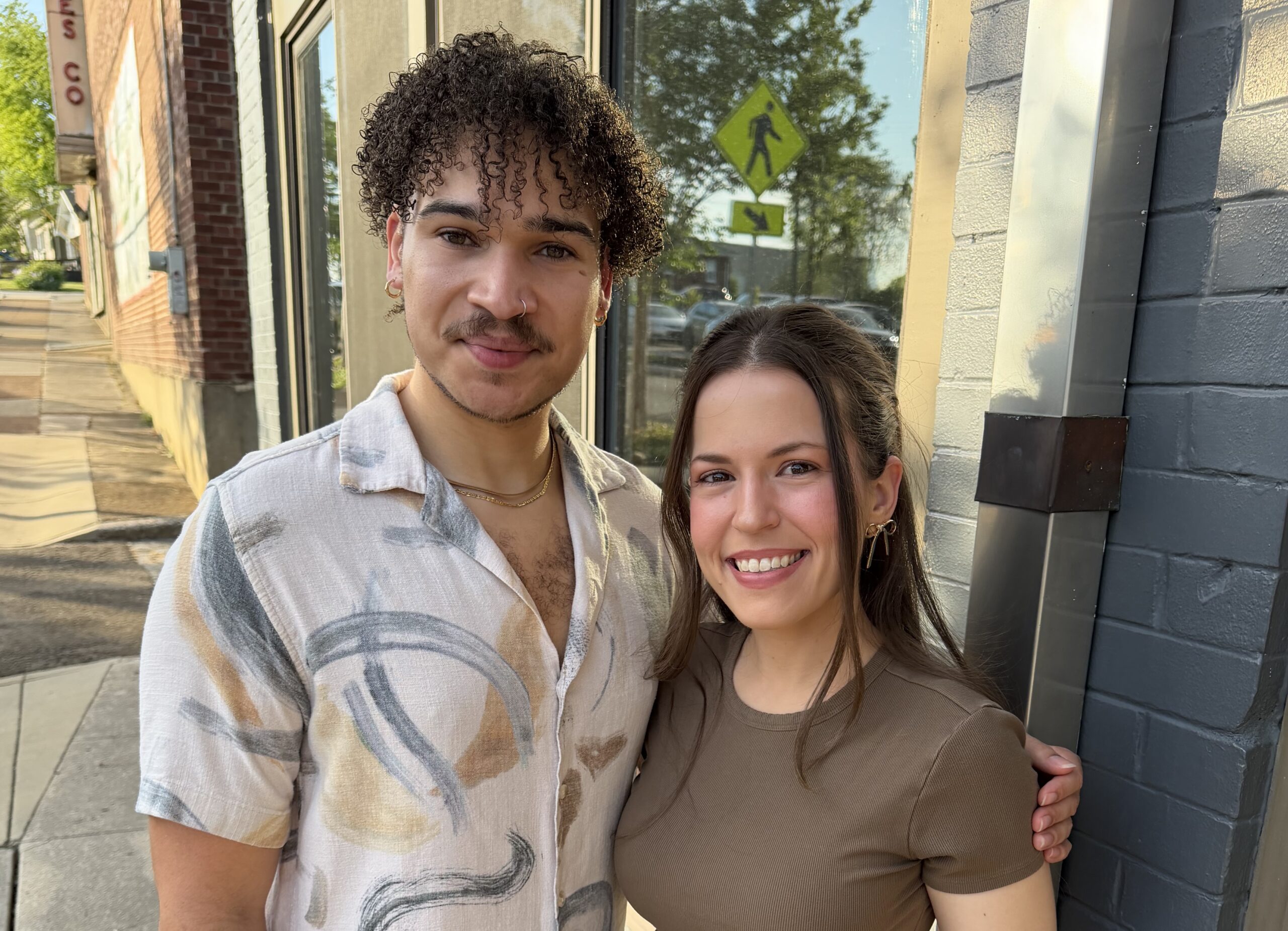
The Democratic Party has an identity problem with voters nationwide, and especially in the South. But a rising wave of young party activists is seeking to bring new energy and ideas into some of the most conservative areas of the country — like Knox County, Tennessee, which has been sending Republicans to Congress since the Civil War. This week, Jesse talks to Solomon Trapp and Julia Kaye, two organizers of a new Young Democrats chapter in the county. They say there is a hunger among younger Southerners for alternatives to prevailing political powers, which aren’t addressing their needs.
Also: Curriculum fights across the South. Texas reshapes its social studies standards to emphasize the state’s accomplishments and downplay less admirable parts of its history. Florida’s war on sociology. And in Virginia, some tensions about how to teach the events of January 6th.
Plus: A look at the Arkansas Folk Festival, marking its 64th year this weekend.
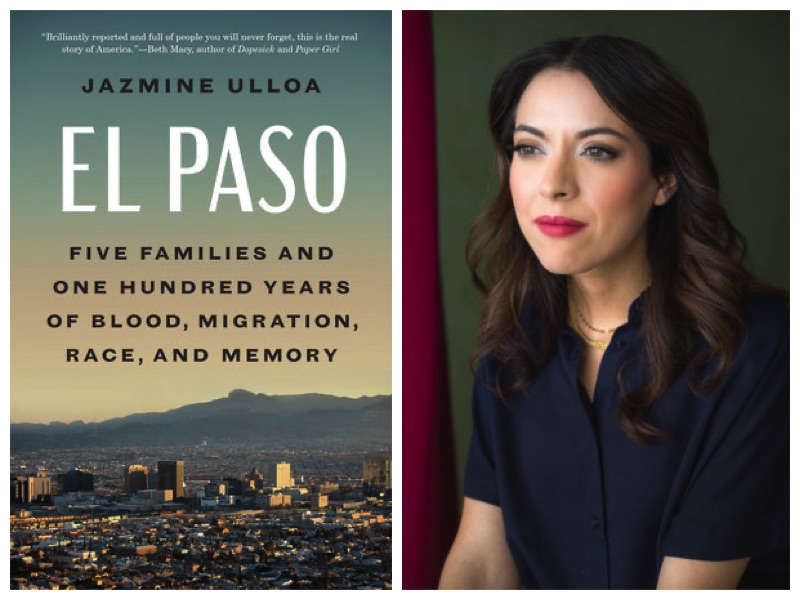
El Paso is a city at multiple borders — not only between countries, but cultures, languages, and histories. This week we talk to journalist Jazmine Ulloa, an El Paso native whose new book about her hometown dives into more a century of its history. Following the stories of five families, she traces the ways El Paso and the United States have been shaped by successive waves of migration and the never-ending fight over who belongs and who doesn’t.
Also: Dems flip two more seats, this time in Florida; Louisiana forces the 10 Commandments into every classroom in the state; and two anti-LGBTQ bills die (for now, anyway) in the Tennessee Legislature. Plus, a look at Little Rock’s unusual purse museum and what it says about women’s history.
NOTE: Due to an editing snafu, a few sentences were cut from the start of the discussion of laws mandating the posting of the 10 Commandments in public schools. Please see the Show Notes for the missing text.
Show Notes:
Here’s the missing text from the 10 Commandments discussion:
“Posting the 10 Commandments in public spaces has been a popular rallying point for Christian conservatives for decades. Former Alabama Supreme Court Chief Justice Roy Moore was famously ousted from office in 2003 for refusing to remove a large sculpture of the Old Testament edicts that he had had installed in the rotunda of the court building.
Federal judges ruled that Moore’s sculpture violated the constitutional separation of church and state.
But successive waves of conservative appointments to the federal bench and especially the U.S. Supreme Court have shifted the landscape for religious expression by public entities, with rulings in several cases broadening the legal scope of what’s allowed.”